

Why Some Expensive Things Still Feel Cheap
Price can buy access, but it cannot buy taste.

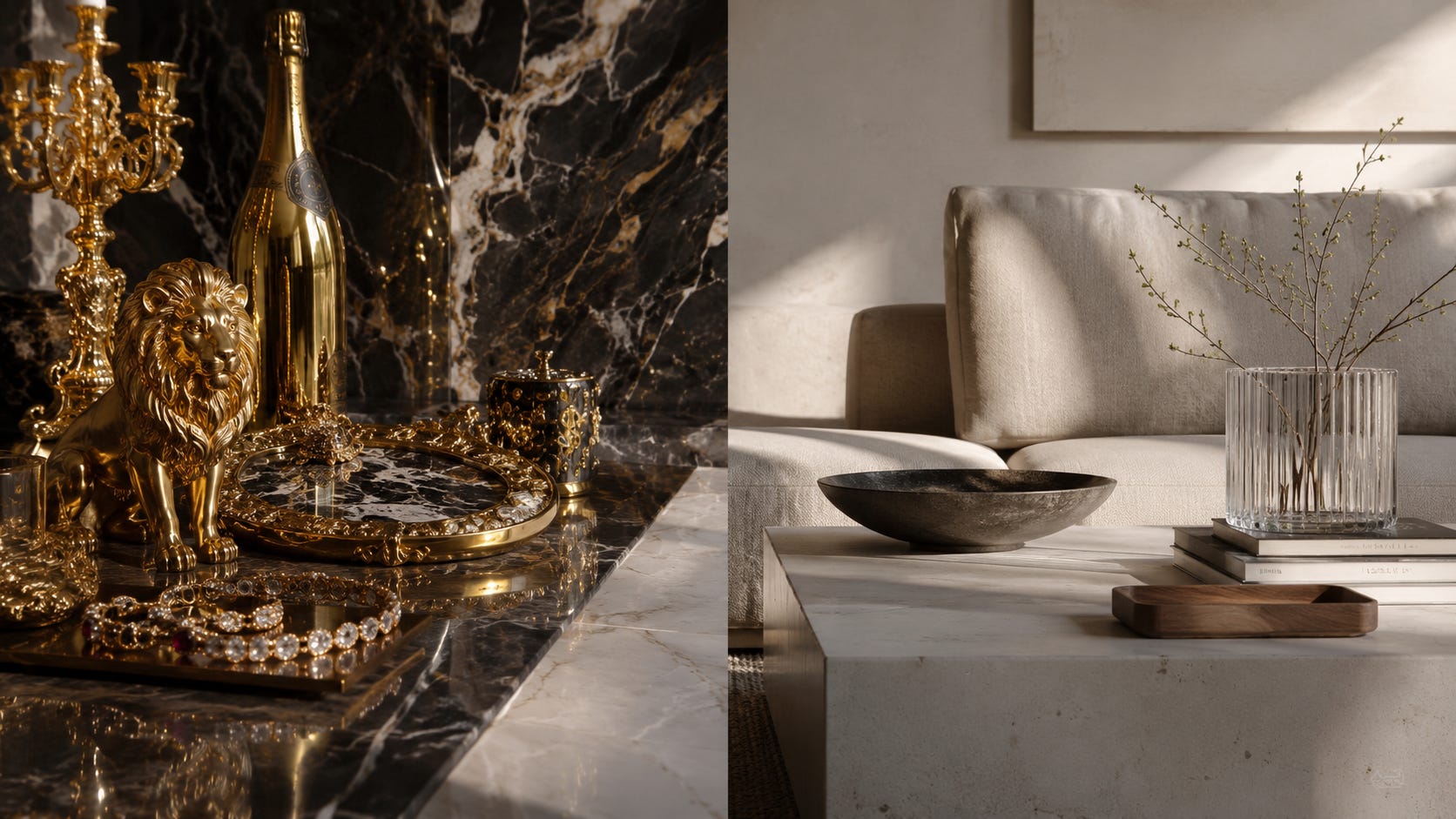
I have seen this too many times in different countries, different sectors and very different kinds of businesses.
A place looks expensive, but feels oddly empty.
A product is priced high, but carries no weight.
A brand spends serious money, but still looks insecure.
An office is full of marble, glass and carefully selected furniture, yet the overall impression is strangely cheap.
This is not really about money.
It is about taste.
That may sound uncomfortable, because taste is often treated like a soft subject. Something personal. Something decorative. Something secondary. In business, people prefer harder words. Strategy. Growth. Scale. Efficiency. Positioning.
But the older I get, the more I think taste is one of the most underestimated business advantages.
Not because taste makes things pretty.
Because taste shapes judgement.
It decides what to include and, more importantly, what to leave out. It creates proportion. It prevents excess. It gives a brand, a product or a space the confidence not to shout.
And that is where many expensive things fail.
They have cost, but no restraint.
They have material, but no character.
They have ambition, but no measure.
They have polish, but no inner coherence.
That is why they still feel cheap.
Cheapness is not always about low price.
Sometimes it is about overcompensation.
Too much branding.
Too much explanation.
Too much decoration.
Too much effort to impress.
Too much need to prove value instead of quietly carrying it.
Real quality rarely behaves like that.
It usually has more calm in it.
The best hotels do not always try the hardest.
The best packaging does not always say the most.
The best products do not need to perform importance every second.
The most refined brands often leave space rather than fill every inch.
This is not only true in design. It is true in leadership too.
Some people become successful and instantly become louder. They speak more, show more, signal more, insist more. They become visually and verbally expensive, but personally cheaper.
Others become more measured.
They do not become smaller. They become clearer. Their confidence no longer needs theatre. Their success begins to show up through precision, composure and consistency.
That, too, is taste.
And this is exactly why taste matters in business far beyond aesthetics.
Taste affects how a company speaks.
How it presents itself.
How it resolves tension.
How it builds environments.
How it handles power.
How it treats customers.
How it turns quality into experience rather than noise.
A business without taste can still grow.
It can sell.
It can raise money.
It can open branches.
It can create visibility.
But very often, it cannot become truly desirable.
It may become big without becoming elegant.
Visible without becoming memorable.
Successful without becoming respected in the deeper sense.
Because desirability does not come only from price, access or promotion.
It comes from the feeling that something has been considered properly.
That someone knew where to stop.
This is where art enters the conversation.
Not as decoration.
As training.
A person shaped by art usually develops a better eye for proportion, tension, silence, material, mood and form. Over time, this affects more than aesthetic preference. It changes behaviour. It changes decision-making. It changes how someone reads a room, a product, a brand or a moment.
It also changes innovation.
Because innovation without taste often becomes noise. A company launches something new, but the newness is clumsy. The technology works, but the experience feels cold. The feature list grows, but the meaning shrinks.
Good innovation is rarely just invention.
It is judgement.
It is knowing what to simplify, what to emphasise, what to remove and what to protect.
This is why so many things in the market today look finished, but not refined.
They are complete, but not convincing.
Expensive, but not elevated.
Modern, but not graceful.
And in a world full of content, products and brands trying too hard, refinement becomes easier to notice.
So does its absence.
This is why I no longer see taste as a luxury topic.
I see it as a business skill.
A real one.
It helps build stronger brands, better products, better spaces and better experiences. It also helps build better people; people who know that strength does not need to be crude, and that success does not have to become noise.
Some expensive things still feel cheap.
Not because they cost too little.
But because money can buy more things than it can buy taste.