

Localising Yourself Between Meetings
In international business, sometimes the best preparation is learning the rhythm of a place, not only the agenda.


There is a version of international business that looks very polished from the outside. Different countries, different cities, airports, hotels, meetings, dinners, new people, new tables. When you describe it, life sounds constantly in motion, open to the world, almost cinematic.
From the inside, it can look slightly different.
Sometimes you spend an entire day in another country and the only things you actually see are a hotel lobby, a meeting room, a taxi window, a plug adapter and emails marked urgent. The city has changed, but the screen is the same. The country has changed, but the inbox continues to behave exactly as it did before. You may collect a new passport stamp while your mind remains trapped between the same open tabs.
That is a strange loss.
Because the real value of international work is not only entering new markets, meeting new people or building something in another country. Those are the visible parts. Underneath them is another opportunity: to come into contact with different rhythms of life, to loosen your own habits a little, and to take something from a place culturally, not only commercially.
A person can travel through the world without letting the world pass through him.
If you do not do this, countries eventually start to look the same. The same laptop, the same coffee cup, the same “quick meeting”, the same delayed replies, the same taxi app, the same PDF file. A person travels through the world, but the world does not really pass through the person.
That is where the problem begins.
Going somewhere for work does not mean you have to use that place only as a location for meetings. Every place has its own rhythm. It has a way of greeting. A relationship with time. A relationship with food. A way of hosting a guest. A special interpretation of the word “soon”, which in some countries is sensitive enough to create a minor diplomatic incident.
In one place, “soon” means soon. In another, it means a little later. In some places, “soon” is an optimistic wish that may become reality if the universe decides to cooperate.
Understanding this teaches more than calendar management.
Working across cultures is not only about translating the contract, converting the price into the local currency or adding a country option to a website. That is technical localisation. It is necessary, but it is not enough. Sometimes the more important thing is to localise yourself a little.
That means not measuring every place by the speed, tone and expectations you brought with you.
In some countries, you sit at the meeting table and go straight to the subject. In others, tea arrives first, then polite questions, then family, then mutual contacts, then the weather briefly joins the meeting, and just when you think business is about to begin, someone offers you a second coffee. At first, this can feel like wasted time. Later, you understand that the work has not failed to start. It has already started.
It simply did not start from the place you expected.
Working across cultures is not only about localising the product. Sometimes you need to localise yourself a little.
Localisation is partly understanding that. It is trying to understand when to speak, when to be quiet, what should be said directly and what is left indirect, and where trust is built not in a sentence, but in behaviour. Sometimes the right rhythm is needed before the right proposal. Sometimes the way you sit matters before the strength of your presentation. Sometimes you need to swallow the sentence “this is how we do it back home”, because that sentence can lose value very quickly in almost every country.
When I go somewhere for work now, I try to take small gaps more seriously. One hour between two meetings may look like lost time at first. But sometimes that hour is enough for the place to tell you something the official meeting cannot. A coffee in a side street, something small from a local bakery, walking a short distance instead of taking a car, conversations you hear in a market, a taxi driver’s overly confident but strangely useful opinion, the patience of a waiter who has correctly identified you as someone who does not know what he is doing.
None of these is a major event. But they often wake you up.
You do not need three weeks of holiday to feel the rhythm of a city.
Sometimes it is enough to arrive fifteen minutes early and not spend that time staring at your phone outside the meeting door. Look around. How do people walk? What does hurry look like here? What kind of sound does the street make? How much distance do people keep from each other? How long does a coffee last? Do tables turn quickly, or do people seem to negotiate with life before standing up?
These small observations are part of the work.
Culture does not live only in museums, old buildings or stories told by guides. It lives in how people wait in line. In how they ask for the bill. In whether they walk you to the door when you leave. In the way they avoid saying “no” directly and instead create fifteen minutes of elegant fog around the subject.
And yes, sometimes finding your way through that fog requires patience more than a map.
This is where quality time becomes important. I do not mean a long holiday, an expensive restaurant or a special travel plan. Sometimes it means walking for twenty minutes with the phone in your pocket. Sometimes it means not disappearing into your hotel room immediately after a meeting. Sometimes it means not reducing a local meal to “just grabbing something quickly.” Sometimes it means trying to understand what people in that place refuse to rush.
These moments are not stolen from work.
They often help you understand the work better. In international business, files, numbers, prices and contracts matter. But there is something else that matters too: understanding the world people are speaking from.
At first, you may explain a delayed answer as laziness. Later, when you begin to understand the local rhythm of decision-making, relationship-building or hierarchy, you may read the same delay differently. You may think someone is weak because he does not object directly in a meeting. Then you realise that in some cultures the objection comes later, in a smaller and more private conversation. You may not understand why a meal is taking so long. Then you realise the meal is not separate from the meeting. It is the meeting continuing with better food.

Sometimes the meal does not happen after the meeting. Sometimes the meal is the meeting continuing.
Noticing these things can make a person slower, but also more effective.
Of course, there are funny moments too. When you try to localise yourself, you can briefly become a creature somewhere between tourist, amateur diplomat and confused cousin. You mispronounce the dish, misread the greeting, assume something is a local tradition and discover three days later that it was just one person’s personal habit. Sometimes, in trying to behave like a local, you become the most foreign thing in the room.
There is no shame in that.
The real mistake is not trying at all.
A person who travels everywhere with his own small instruction manual never fully arrives anywhere. If you judge every place only by the standards of your own country, you will mostly see inconvenience. Service is slow. Systems are different. People are indirect. Roads are confusing. Food is heavy. Coffee takes too long. Some of this may be true. But if that is all you see, you are not really travelling through the country. You are travelling through your own impatience.
Sometimes you are not visiting another country. You are visiting your own impatience.
International work should teach a person to become more flexible. Not only commercially, but humanly. Before thinking about what should be changed in a place, it is worth noticing what that place changes in you. Sometimes a country teaches patience. Sometimes clarity. Sometimes silence. Sometimes that negotiation is not only about numbers, but also about rhythm.
And sometimes the greatest lesson is accepting that “let’s just have a quick coffee and go” is a dangerously ambitious sentence in certain parts of the world.
I try to keep a simple rule for myself: if I go somewhere for work, I do not want to return with only work notes. I want to bring back at least one observation, one taste, one street, one conversation, one habit or one small surprise. These things stay with you. Sometimes they stay longer than a deal.
That does not mean taking work lightly. It means refusing to reduce work to numbers and documents alone. Because in the end, business still happens between people. And people are not made only of email addresses, titles and signatures. They have rhythms. Tables. Silences. Jokes. Ways of saying “we will speak later”, which in some places means you really will speak later, and in others is a polite little tombstone.
Catching cultural opportunities means taking these differences seriously.
You do not need to run around like a tourist in every place you visit. You do not need to turn every empty hour into an experience. But if you allow a country to give you only work, you will miss a lot. Sometimes the best idea comes not in the meeting room, but while walking after the meeting. Sometimes the best relationship is not built during the formal presentation, but over the second tea at the table. Sometimes understanding a city is the first proper step toward doing business there.
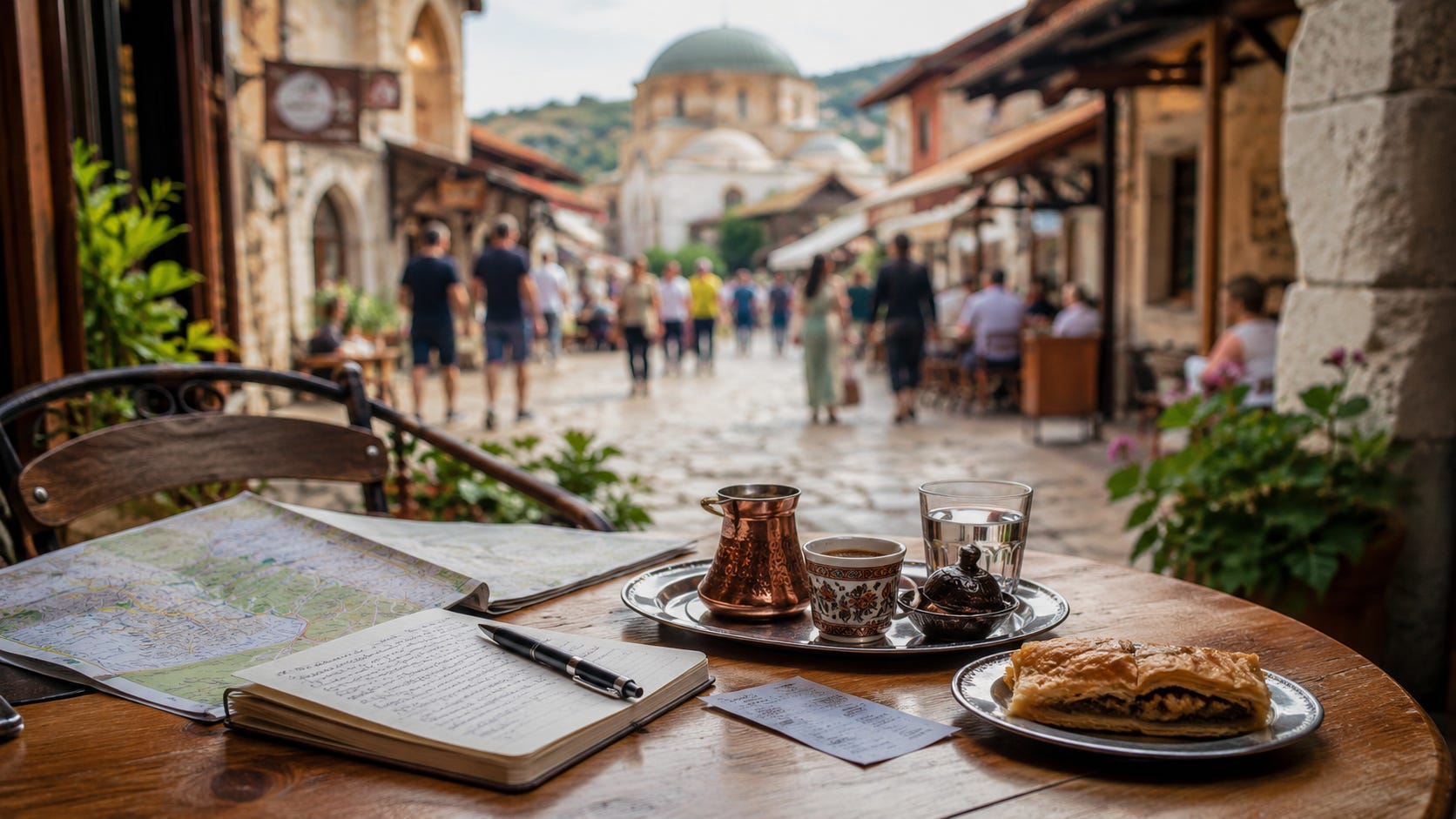
If we want to work with the world, it is not enough to see the world only as a market. We need to see it also as place, sound, food, time and habit.
And perhaps this is the best part of international business when it is lived properly: it does not only make a person bigger. It makes him wider. Not only someone who has seen more countries, but someone who has recognised more rhythms, read more human situations and learned to be slightly embarrassed by his own certainties.
So it is worth not handing every empty space in the agenda over to email.
Sometimes the city introduces itself in that space. Sometimes a small door into a culture opens. Sometimes a person returns from a work trip with a piece of time that actually belonged to him.
That is not a bad result at all.