

How Much Do We Change When We Cross a Border?
A continuing journey through Bosnia, Montenegro and Albania is a reminder that countries can change within a few kilometres, while people remain both strikingly similar and genuinely different.

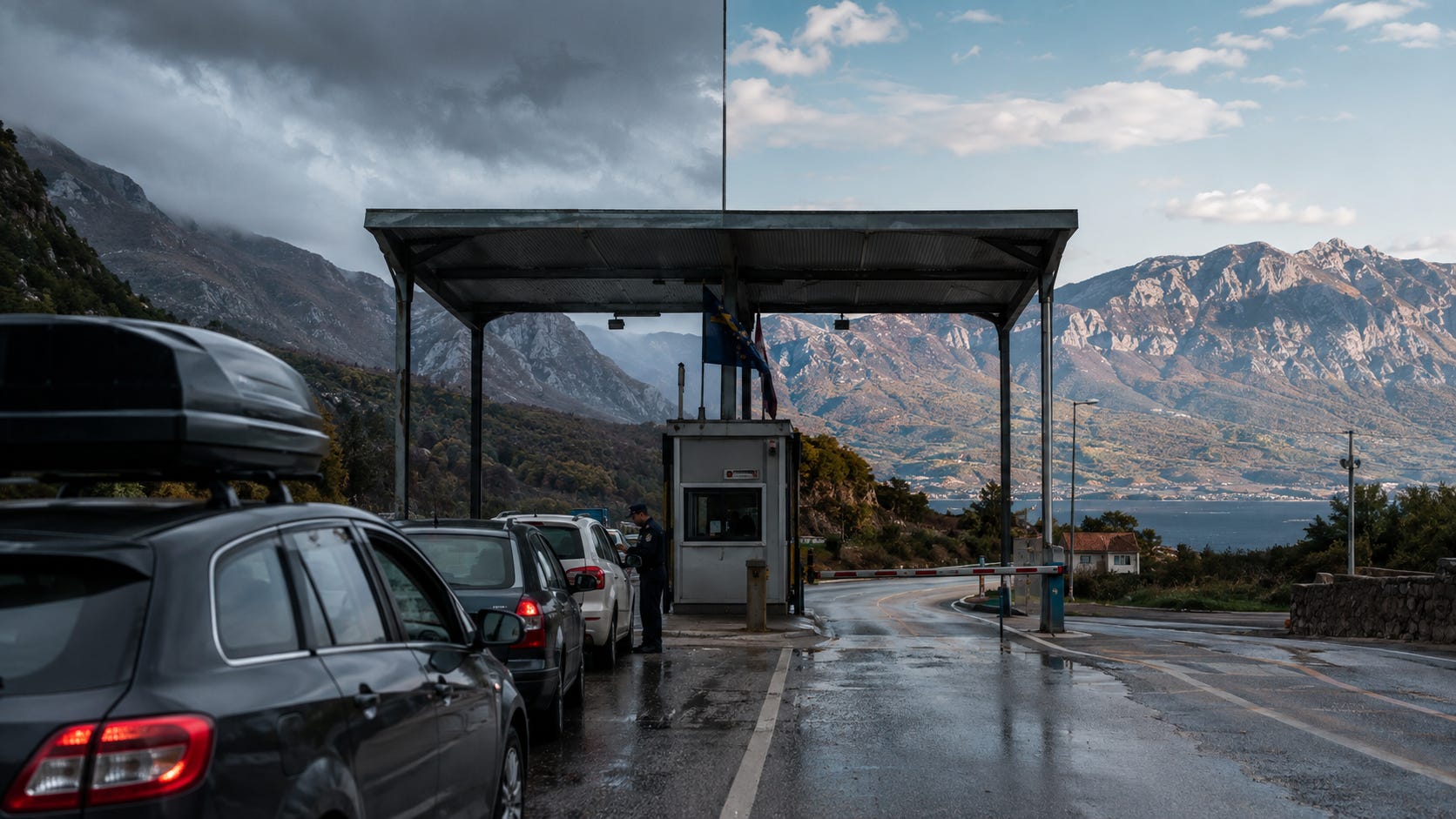
This week, I am travelling through Bosnia and Herzegovina, Montenegro and Albania. The journey is still ongoing.
As you approach a border crossing, the change begins with small signs. Cars slow down, passports come out and the language on the road signs shifts. Ahead of you are number plates from different countries, several queues and people trying to work out which lane they are supposed to join.
A few minutes after crossing, your phone connects to a new network. The road markings, the shape of the houses, the sound of conversation and the general rhythm of the surroundings begin to change.
The people waiting at the border, however, do not change very much.
Someone is trying to understand why the queue is not moving. A family checks its documents again. A child in the back seat has grown restless. A driver lowers the window to hear what the officer is saying. Everyone wants to cross, continue the journey and reach wherever they are going.
Borders separate countries. They do very little to separate the ordinary concerns of the people passing through them.
Proximity is not sameness
Travelling from Bosnia and Herzegovina into Montenegro and then Albania does not feel like entering an entirely unfamiliar world. There is much that feels recognisable in the landscape, the food, family relationships, everyday life built around coffee and the way people remain close to one another.
Sometimes a street, the arrangement of a table or a small roadside shop recalls the country you left only a few hours earlier. Borders appear as precise lines on a map, but life does not divide itself quite so neatly.
Then the differences begin to show.
The traffic moves differently. The tone of conversation, personal distance, attitudes towards time and the way an ordinary problem is handled begin to shift. Behaviour that feels perfectly natural in one place may appear overly harsh, unusually relaxed or unnecessarily formal only a few kilometres away.
Similarity offers immediate comfort. But that comfort should not lead us to imagine that countries and people are copies of one another.
Proximity is not sameness. Difference does not necessarily mean foreignness.
Perhaps seeing another place clearly begins with keeping both ideas in mind at the same time.
We carry more than luggage
When we travel, we pack clothes, documents and whatever we may need for the next few days. But those are not the only things we take with us.
We also carry our preferred pace, our idea of comfort, our patience and the invisible rules we have formed about how life is supposed to work.
We believe we know how long a process should take. We have an established idea of how people should speak, how service should be provided, how traffic should move and in what order a problem should be solved.
When that order does not work in a new place, our first reaction is often irritation rather than curiosity.
Before asking, “Why is it done this way?” we think, “It should not be done this way.”
Of course, not every difference is valuable or defensible. There is no need to excuse everything in the name of culture. Poor service is poor service, disrespect is disrespect and disorder is sometimes simply disorder.
But an experience being difficult for us is not enough to justify a verdict on an entire country or society.
Some differences can be understood. Some can be accepted without being fully understood. Others may continue to make little sense to us. Even then, we can face them without exaggeration, contempt or treating our own habits as the natural measure of the world.
Being open to the world does not mean liking everything. It means not judging everything first by our own measure.
Another way of travelling lightly
A simpler life is often described in terms of owning fewer things. The value of that becomes obvious while travelling; there is nothing particularly romantic about a heavy suitcase.
But the burden that tires us most is not always what we carry. Sometimes it is the expectation that everything should happen in the way we are used to.
When we expect every country to move at the same speed, everyone to understand us immediately and daily life to arrange itself around our comfort, even the smallest difference begins to occupy too much space.
Once that expectation is reduced, the surroundings become easier to see. Constant comparison gives way to curiosity. “This is not how we do it” becomes “Why is it done this way here?”
A phone can connect to a new network within seconds. The mind usually takes longer to connect to a new place.
That does not require a dramatic personal transformation. A little patience, some curiosity and the memory that we do not need to be right in every encounter are often enough.
Simplicity is not always about owning less.
Sometimes it is about trying to control less.
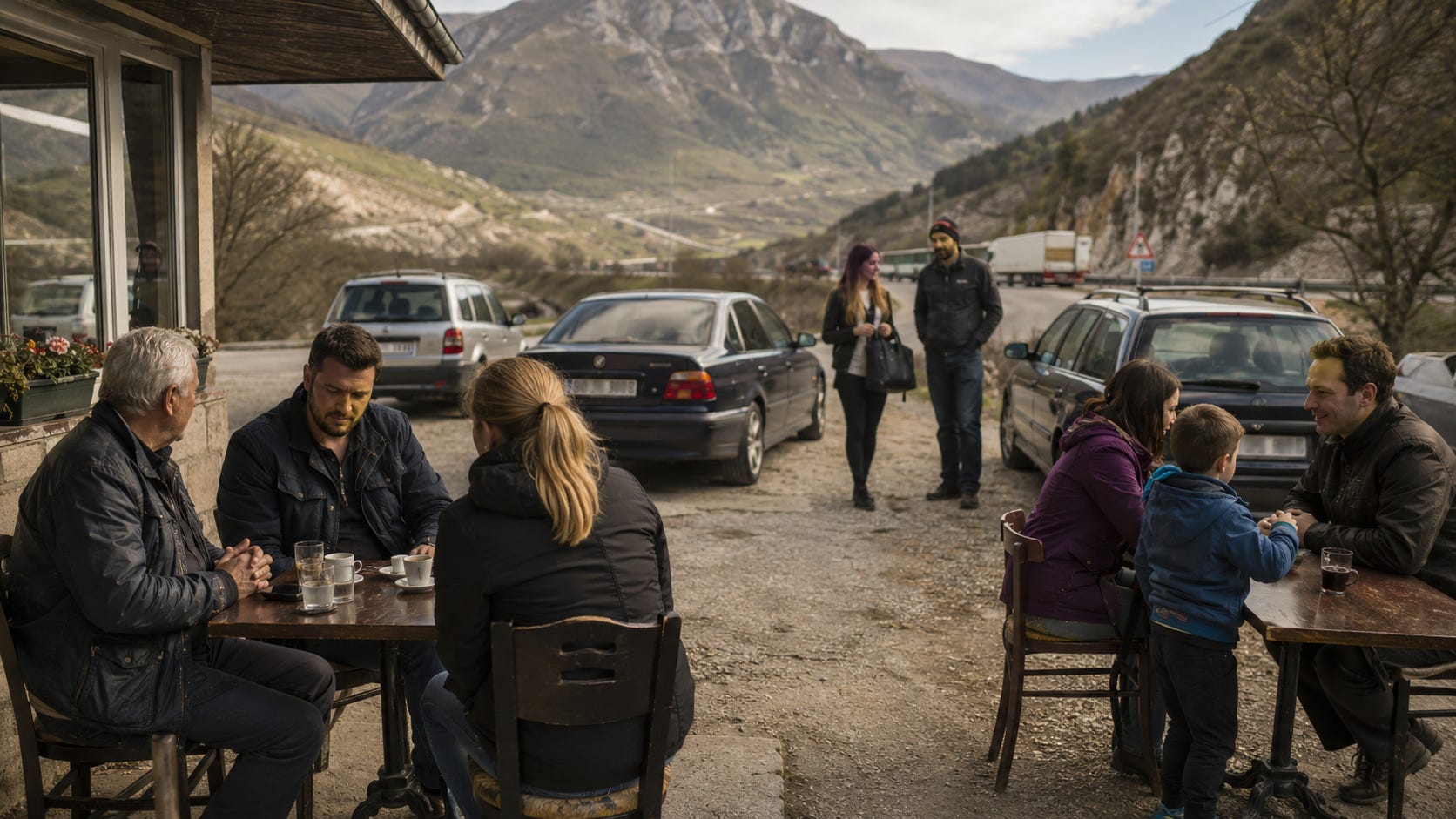
On both sides of the border
A border crossing makes the differences between countries official. The passport changes, the language changes, and so do the rules and signs.
Yet on both sides of the line, people are largely pursuing the same things.
They want safety, a livelihood, respect, peace, a better future for their children and a small space they can call their own. The language, rhythm and form of those desires may change, but the needs themselves remain remarkably familiar.
Being open to other places may not mean feeling at home everywhere. Nor does everywhere need to feel like home.
Perhaps the point is to be present in a place without trying to make it resemble the one you came from.
To recognise how similar people are without allowing that similarity to erase real differences; to notice those differences without allowing them to turn everyone into strangers.
At a border crossing, the world can reveal two apparently opposing truths at once:
The human scene is deeply familiar.
The ways in which we live are genuinely different.
Perhaps the simplest lesson of the journey is that we do not have to choose only one of those truths.